


A growing global shift beyond GDP puts Reykjavík in focus


As the Wellbeing Economy Forum 2026 approaches, Reykjavík is set to host a timely international conversation on how societies define progress and success.
For decades, GDP has remained the dominant measure of economic performance. But across international institutions, policy circles and academic debate, there is growing recognition that economic output alone does not tell us whether people are healthy, secure and able to thrive, or whether economies are operating within environmental limits. That wider shift gives this year’s Forum particular relevance.
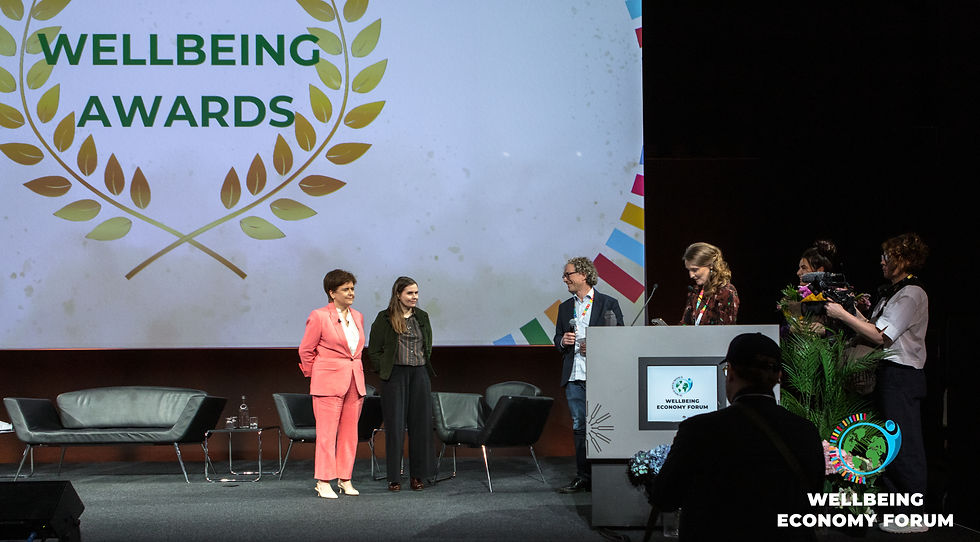
The Wellbeing Economy Forum 2026 takes place at Harpa in Reykjavík on 16–17 April under the theme The Power of Wellbeing: Redefining Success. More than just an annual gathering, it comes at a time when international efforts to rethink how progress is measured are moving more visibly into the mainstream.
One important signal of that momentum comes from the United Nations. Following the Pact for the Future, the UN Secretary-General established a High-Level Expert Group on Beyond GDP in May 2025 to develop recommendations for a limited number of indicators that complement or go beyond GDP. Interim recommendations have already been released for consultation, showing that this is no longer a theoretical discussion at the margins, but an active international policy process.
At the same time, concern about inequality is sharpening. A landmark G20 report led by Joseph Stiglitz in November 2025 described today’s situation as an “inequality emergency” and called for the creation of an International Panel on Inequality. The proposal reflects a growing view that inequality should be treated with the same seriousness and coordinated international attention that climate change has received in recent decades.
Another related strand of this broader debate is the connection between poverty, human rights and economic models that do not rely on endless growth. A Roadmap for Eradicating Poverty Beyond Growth is due to be discussed at a high-level conference in Geneva on 22 April 2026, organised under the mandate of the UN Special Rapporteur on extreme poverty and human rights as a contribution to the ILO-led Global Coalition for Social Justice.
Taken together, these developments point to a broader shift in how progress is being understood. The question is no longer simply whether GDP remains useful. It is whether GDP, on its own, is enough to guide societies through a period marked by climate instability, widening inequality, democratic strain and declining trust in institutions.
This is why Reykjavík matters this year. The Wellbeing Economy Forum 2026 arrives at a moment when ideas that once sat outside the centre of economic debate are receiving greater international attention. That makes the Forum more than a discussion about alternative metrics. It becomes part of a wider effort to ask what economies should ultimately deliver, and how success can be defined in ways that better reflect human wellbeing, social equity and long-term sustainability.


_edited.png)


